Cute Is Cheap. Honest Is Not.
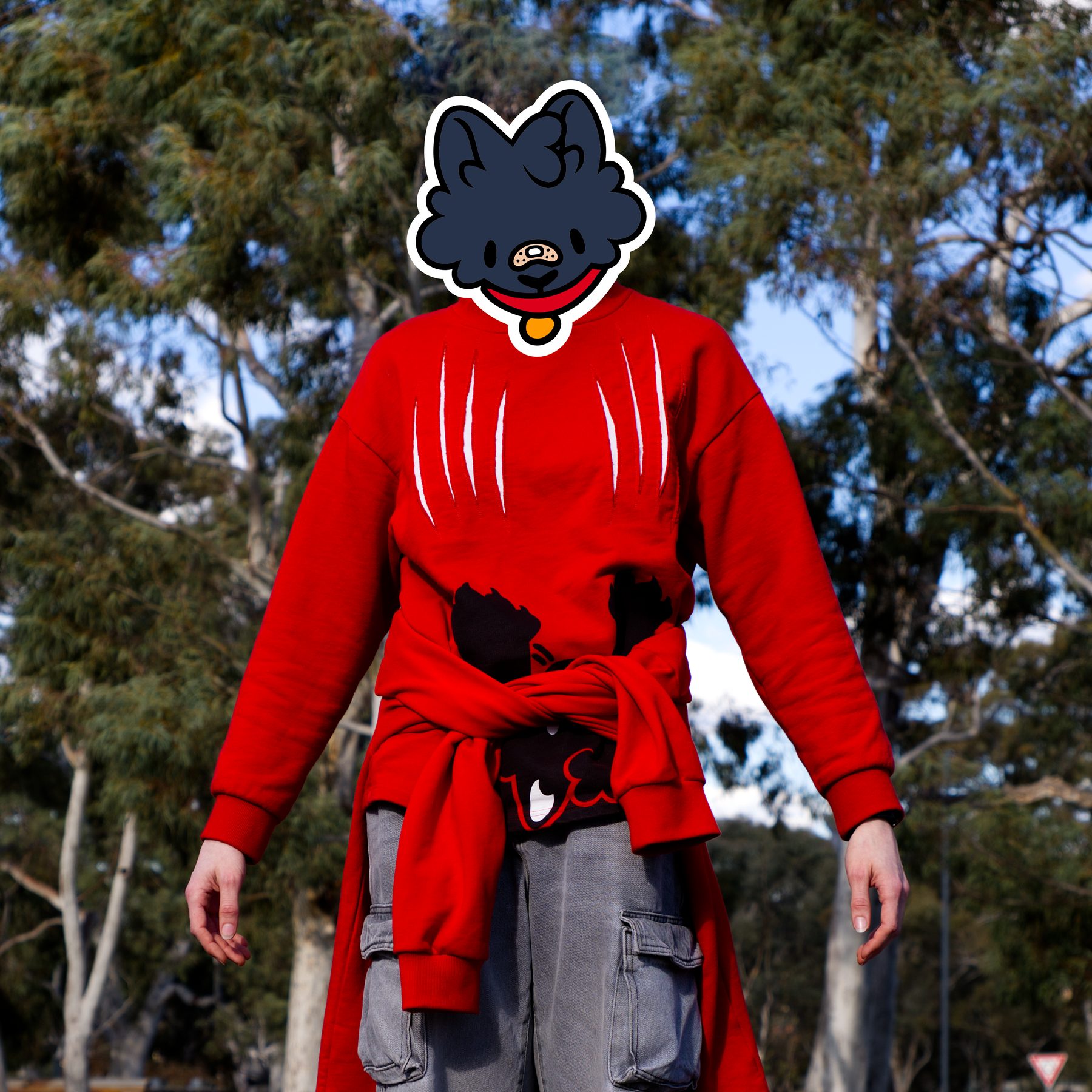
THAT'S RUFF, a roster of animals having a bad day, and what a brand gets when it puts the mishap at the centre instead of the mascot.
There is an entire market built on drawing a happy animal.
Put a smiling dog on a shirt. Print it cheap. Ship it fast. The customer buys the feeling on the front and learns about the fabric three washes later, when the print has gone chalky and the collar has given up.
The cuteness was never the product. It was the cover.
That is the segment THAT'S RUFF walked into two years ago. The thing they changed was not the drawing.
The name arrived before the world did
It started as a pun. Rough. Ruff. The noise a dog makes sitting on top of the word for a day that has gone badly.
Most operations would take a name that good and stop, because a name that good already does the job of a brand. Three people kept pulling on it instead. Maxx on art, Max on design, Aaron on logistics, working across Canberra and Melbourne. Characters got named. Names turned into traits. Traits turned into scenarios, and the scenarios started referring to each other.
A product line has a catalogue. This has a cast.
Ruff the resilient beagle. Blotches the adventurous calico. Lamp, the samoyed in the cone of shame. Vandal the destructive black cat. Ollie, Puddles, Slip, Whey, Tumbles, Palette, Stamps, Linguine, Clover, Dip. Fourteen animals with fixed traits, plus a slot on the site marked COMING SOON, because the roster is still hiring.
The naming does structural work. Linguine is a food-motivated fox. Say the name and the trait arrives with it, so the character is legible before a word of copy loads.
"Someone might have had a 'ruff' experience at a restaurant, like a plate of food spilling onto their lap, and when they see Linguine, they can attach that memory to Linguine's story."
The character is not what is being sold. The character is a container the customer fills with their own bad afternoon.
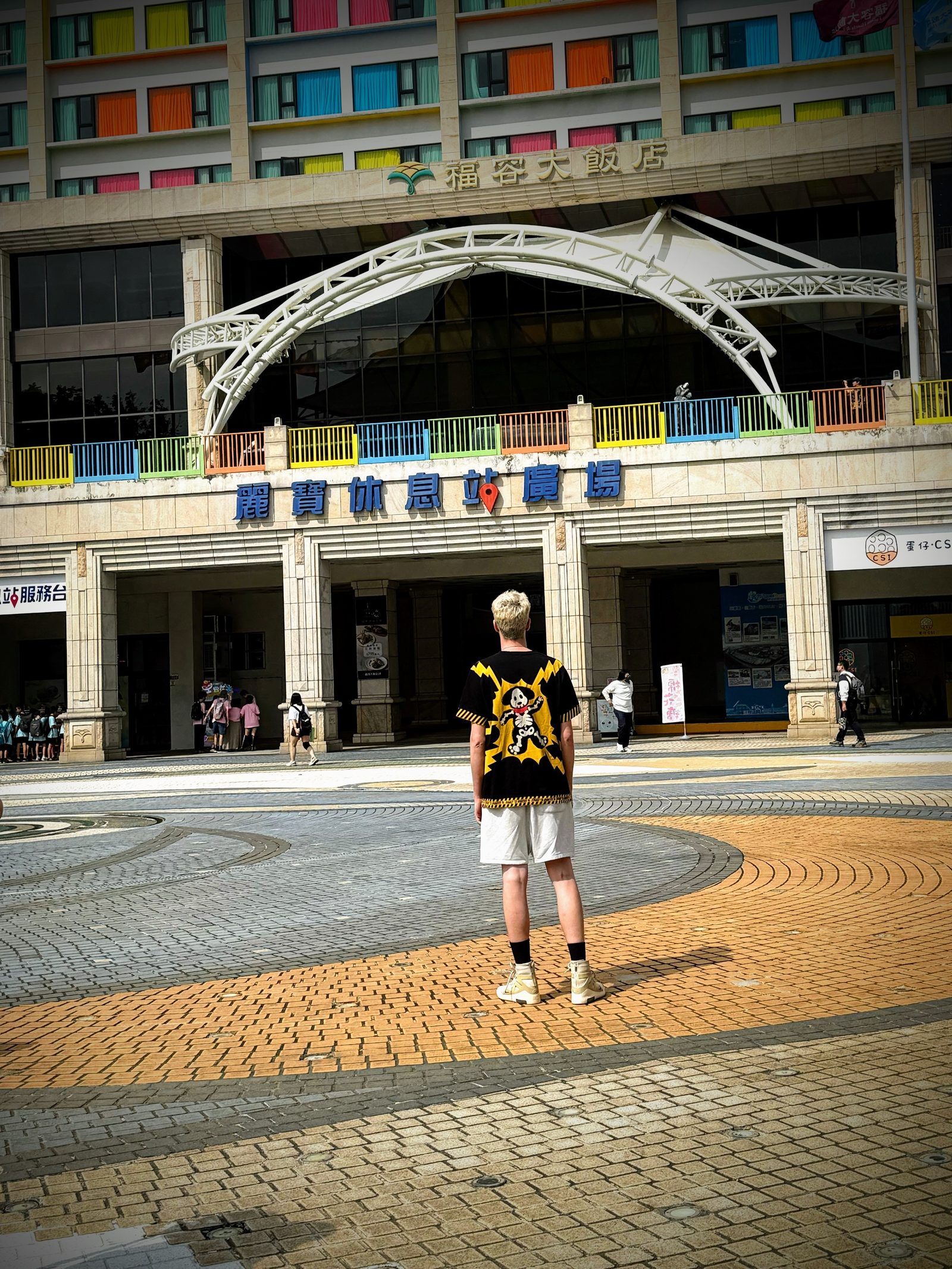
How an animal earns a place
There is no single door in. Aaron describes a process running in both directions.
Sometimes the situation comes first. A trait the world needs covered that nobody on the roster fits, so the question becomes which animal carries it best.
Sometimes it starts with the animal, and the job is finding what it is for.
"We really wanted a deer character. What's a funny role they can fit? A coatrack."
That is the whole method in one line. Antlers, a hallway, an object that exists to hold other people's coats. The joke is not decoration. The joke is the casting decision.
The deer became Clover, and arrived on a silk necktie built around office mishaps. A character conceived as a coatrack, debuting on the one garment people wear to sit at a desk.
The centre nobody else is willing to pick
Every brand has a look. Very few have a centre.
A centre is a rule you agree to be governed by, one that makes certain products impossible. Most operations will not pay that, so they build a look instead and call it an identity.
THAT'S RUFF picked the imperfect moment. Not the animal, not the palette, not the typeface. The scratch, the wipeout, the spill.
The reasoning is harder than the aesthetic suggests.
"The market of typical cute dogs and cats on shirts leans towards low quality apparel that doesn't last or goes scratchy, and fades quickly. It's designed dishonestly."
Designed dishonestly. That is a difficult thing to say about your own category, and the whole brand hangs off it. The gap between the front of the shirt and the truth of the shirt is the product.
So they closed it.
"These aren't just your typical cartoon animals. They're going through it. They're more honest about life's gnarled edges."
Honesty in the artwork and honesty in the cotton, running as one decision. Heavyweight cotton, natural fibres, no plastic. Stickers made from plant cellulose so they break down rather than outliving everyone.
A centre also makes the calls in advance, so the brand stops drifting toward whatever performed last month.
Taste is a wardrobe, not a talent
Ask most founders where taste enters and the answer goes mystical. Here it is domestic. The reference library is the clothes they already own, and the test is whether a new piece carries the same charge.
The reaching happens somewhere more interesting.
"We are always inspired by what is inaccessible to us. There are clothes or goods that are so far financially out of reach for us, but we know we can make it ourselves, so we put in the time and effort to research, and sample, and iterate, until we look at what we've got and don't see the original inspiration."
Until you cannot see the reference any more. That is the exit condition, and it separates homage from theft, and a sample from a product.
It does not always land. Most of the store currently reads SOLD OUT, and they are relaxed about saying so. A brand built on the moment it goes wrong does not get to be precious about its own.
The trade secret, when they name it, is not a technique. It is intention.
"There's always a reason behind why we picked a certain colour for the shirt, the fabric. It's all about being intentional with what we do."
The product copy is where you test that claim. Lamp's tee notes that the world of RUFF has public healthcare. Every listing is a caption from an ongoing story, not a spec sheet with a mood attached.
The room in Collingwood
Then they did the least internet thing available and took a shopfront. 79 Johnston Street, Collingwood, stocked with in-store exclusives.
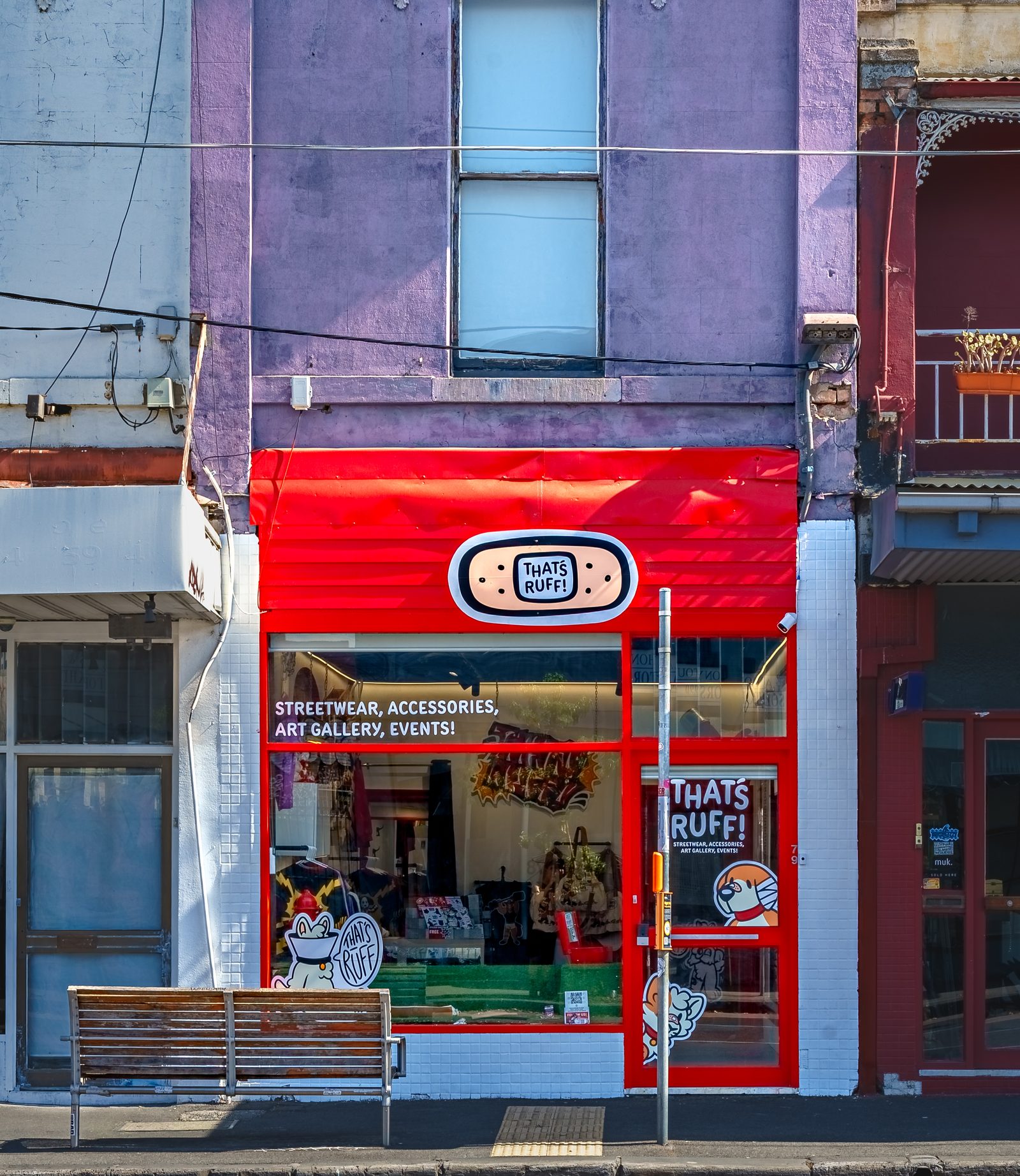
Not nostalgia. Their read is that the advantage flipped. Standing out used to mean putting yourself online. Now everyone is online and everyone is bombarded with information, images and noise, so the scarce thing is being somewhere.
"Showing that our world of characters physically exists, whether that be in our store or at markets, is a huge boost in authenticity and so underrated in building actual connection with our community. Even if someone looking to grab something from our store is halfway across the world and can't see or visit us in person, they know other people are able to touch our stuff, judge it and decide if it's worth it."
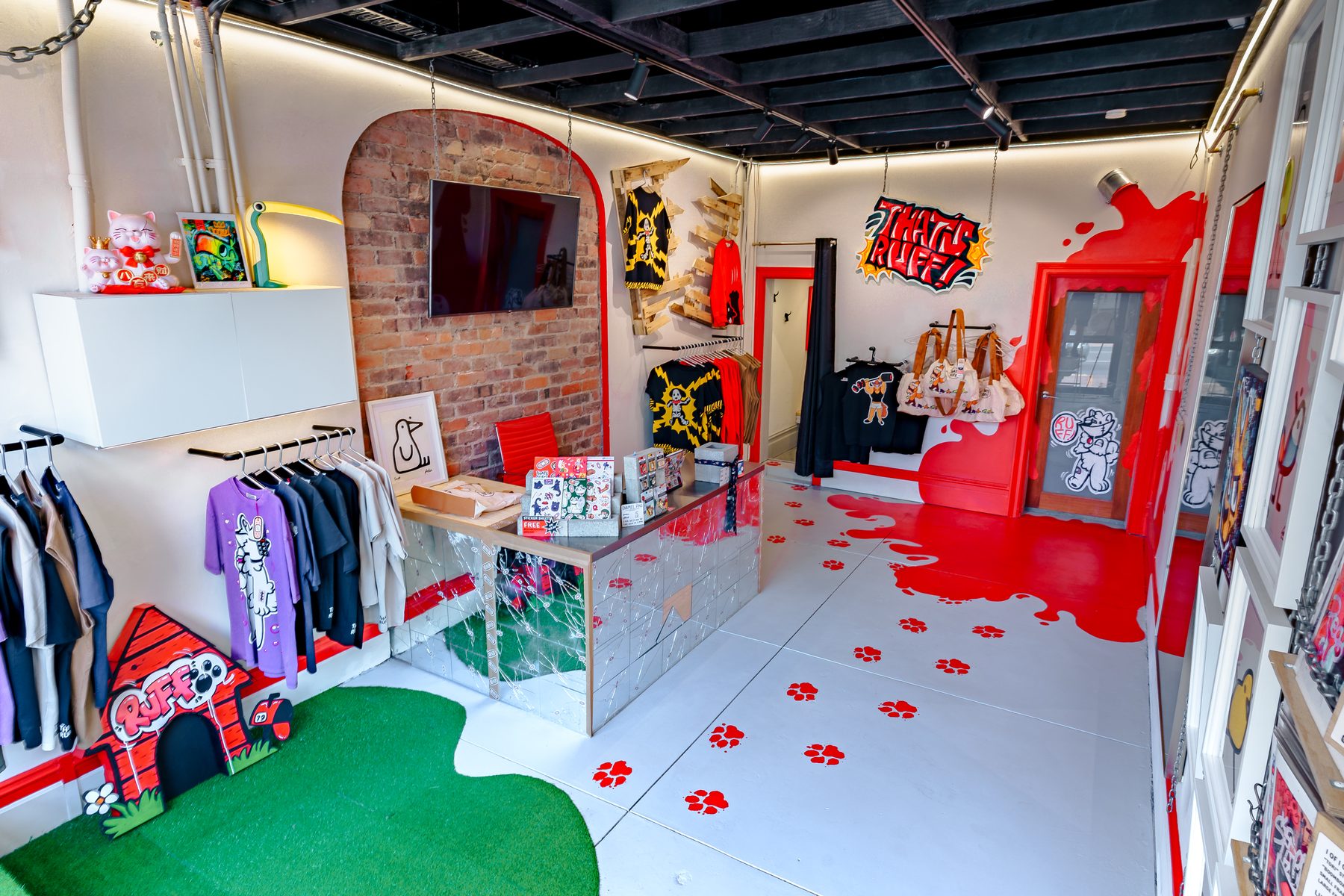
Someone, somewhere, is holding the thing and deciding. That is a claim the internet cannot make on your behalf.
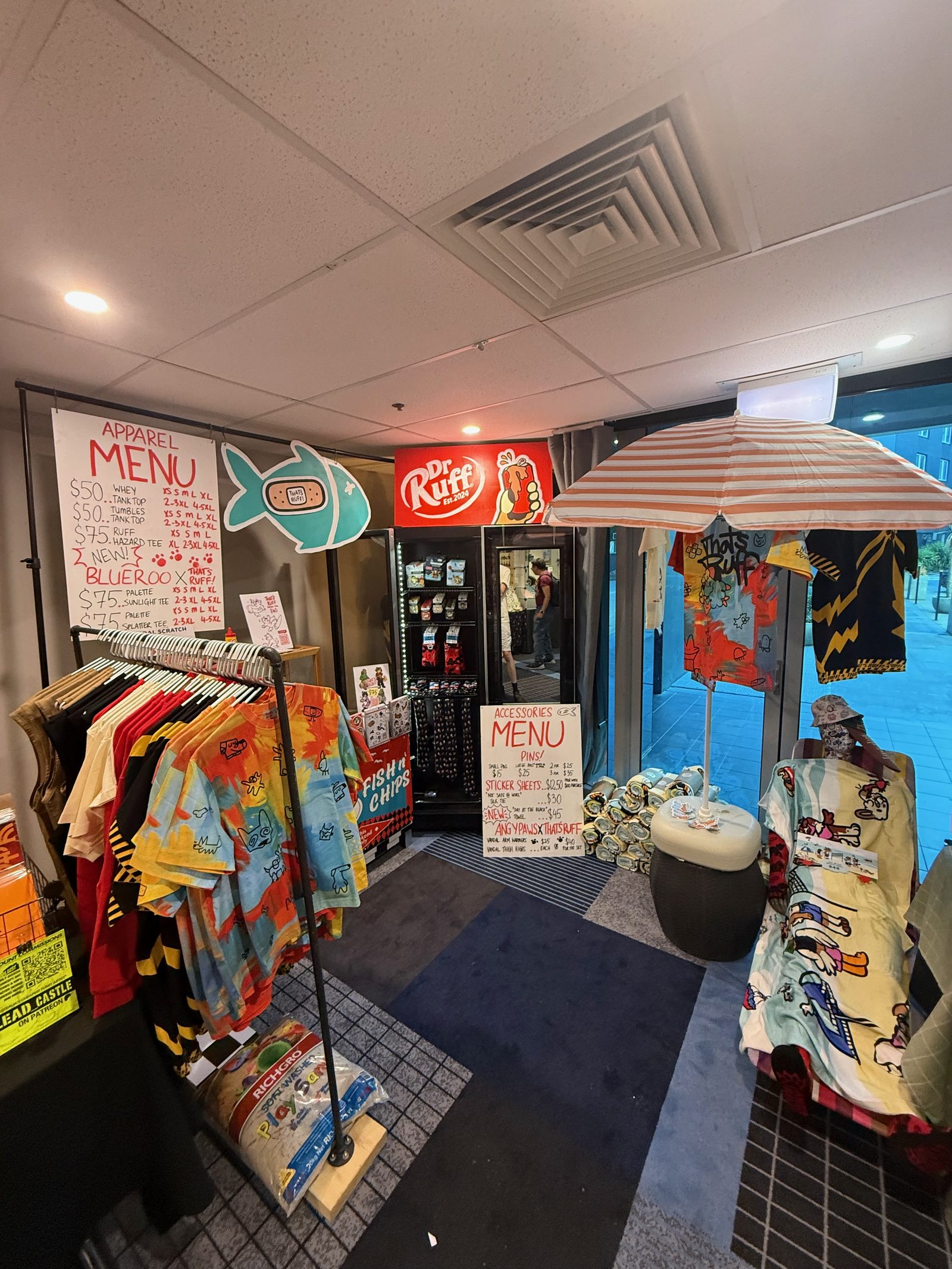
The room does a second job too. Their market setups run themed and built from recycled materials, an office, a home open, a chip shop, a boat. The only threat they name is not a competitor or an algorithm. It is going stale. A screen cannot be walked into.
Who this is actually for
Every brand claims everyone. This one is specific, and the specificity is not demographic.
"People who are comfortable with the fact that life is colourful. It's not always going to be smooth, and inevitably it'll get ruff. Those kinds of people really connect with our narrative. It's okay to laugh and make fun of life's mishaps, especially if they are represented in the form of funny animals, and to wear those scars with pride."
Wear those scars with pride. The customer and the product description in the same sentence.
It is also the lane a lot of Melbourne is working in right now. World first, product second. The garment is downstream of the universe rather than the reason it exists. That order is slow and almost impossible to copy, because a competitor can lift a graphic in an afternoon and cannot lift two years of decisions about who Vandal is.
The joke underneath
Ask about five years and the dreams come out. Better standards across the industry. Independent creators carving their own path. The collaborations. The expansion.
Then the answer turns around and looks backwards instead.
Two years. Work shipped worldwide. Three people who made it the full time job. And a shopfront nobody on the team saw coming, not this soon, not at all.
Which is the joke sitting underneath the whole operation.
You cannot plan the mishap. You can only decide, in advance, to be the kind of outfit that keeps going when it lands.
That decision is the brand.
The animals are just where it shows.
THAT'S RUFF is Maxx, Max and Aaron. 79 Johnston Street, Collingwood, Melbourne. Follow them @thatsruffau or at thatsruff.com.
Creative Spotlight is an ongoing series on the Henry Skillz Transmission Log — documenting the operators, creatives, and builders working at the intersection of culture, craft, and new systems.
Henry Skillz is the founder of Spacely Clothing and creative director at Holla Back Entertainment. Melbourne based.
Enlist With The Ground Crew
First access, field notes, and 15% on Spacely, permanently.
Request Access ↗