The Set Doesn't Exist Until the Room Does.
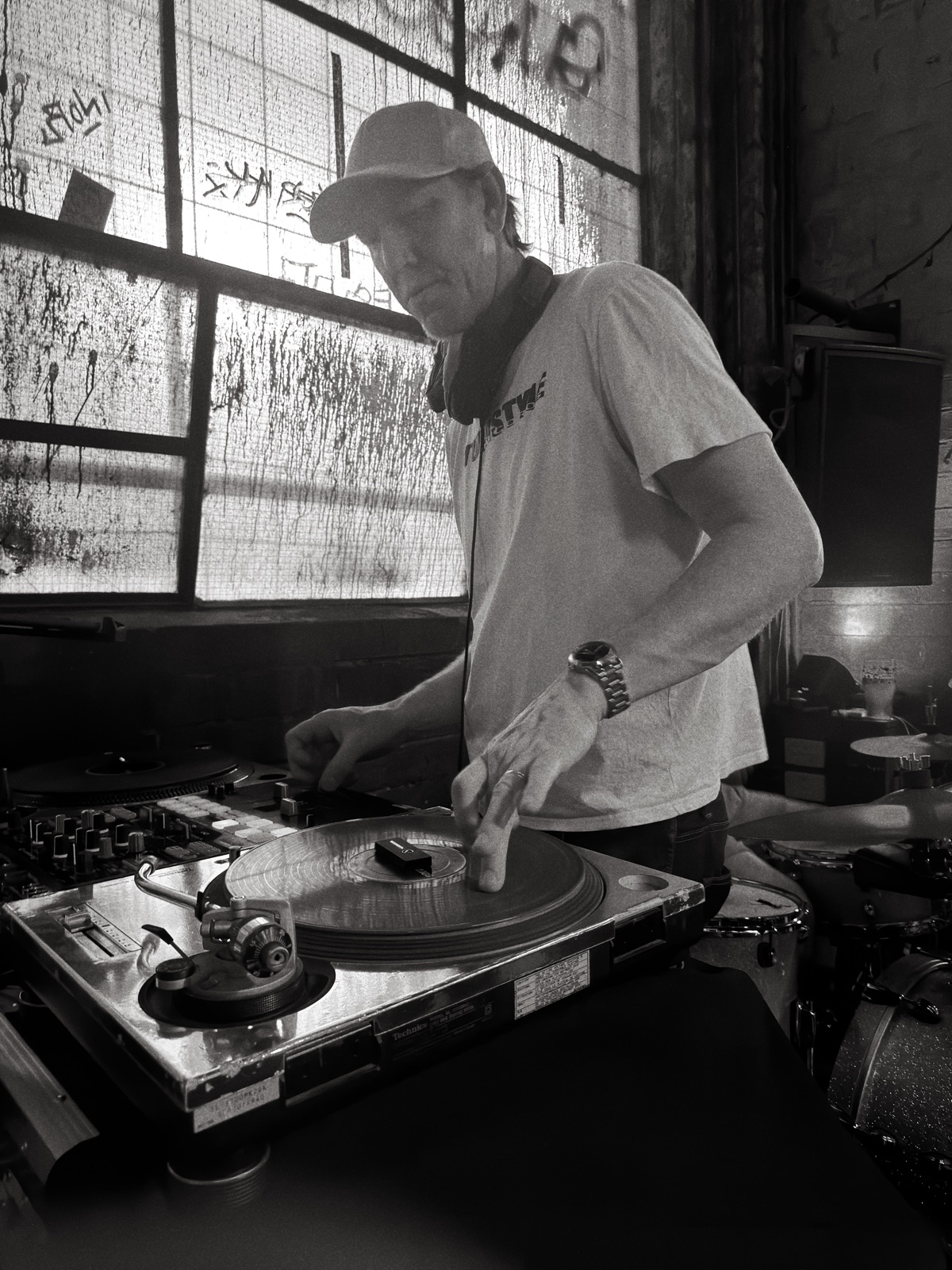
ILL EAGLE DJS, thirty years in one booth, and the turntable they refuse to sync.
Walk into most rooms in Melbourne on a Saturday night and the set you're hearing was finished days ago.
Planned at home. Trimmed in software. Filed in a playlist with the transitions already decided.
The sync button ended the argument about skill years ago. Preparation ended the argument about risk. What's left, most nights, is playback with better lighting.
Nobody's cheating. It's just that the job stopped asking for anything.
That's the backdrop for what's happening in one particular booth — a rig that looks, at first glance, like more automation, not less.
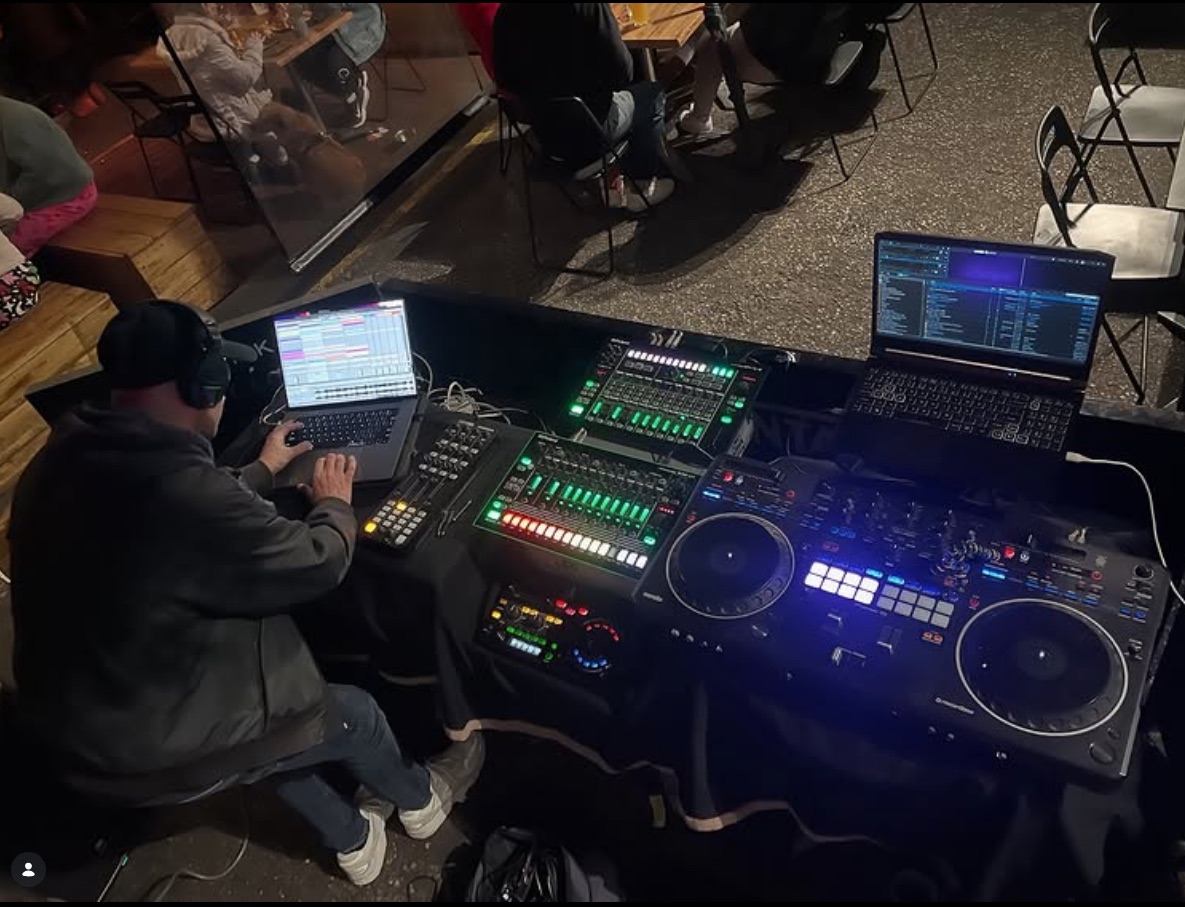
Laptops. Drum machines. Effects units. Four channels of Ableton running at once. Every machine on the table synced to a single clock, so the whole system moves together when the tempo moves.
Every machine except one.
On the right-hand side sits a turntable, and it isn't synced to anything. It gets matched the old way — by ear, live, against everything the machines are doing.
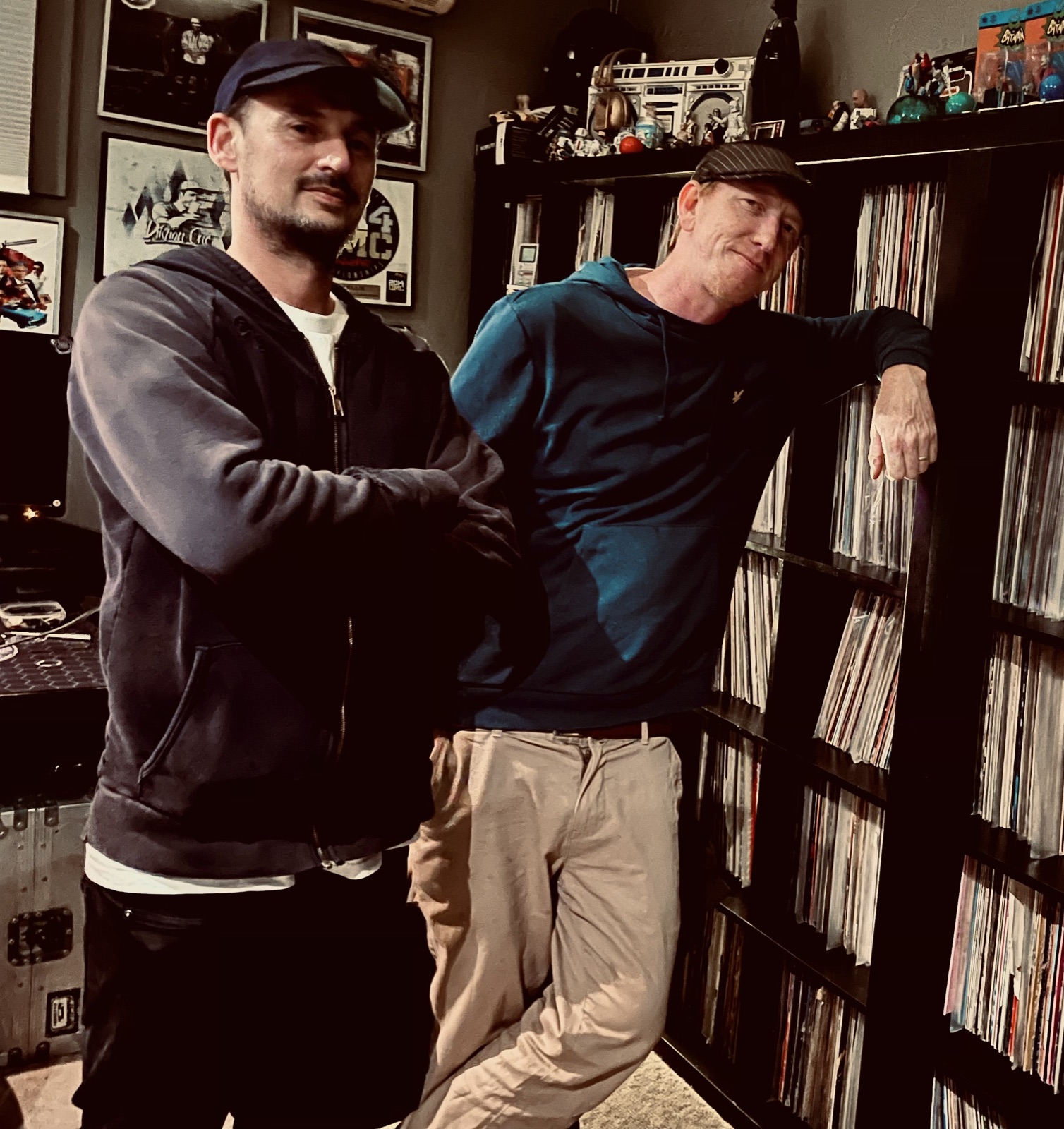
That's ILL EAGLE DJS. DJ Rellik — Tim Trappett, scratch DJ, 2014 DMC Victorian champion — and DJ Intalink — Kristian Piccoli, DJ and production engineer. Thirty years playing together. Not thirty years on the same circuit. Thirty years in the same booth.
They met at a house party, gelled immediately, and never stopped. Layered mixtapes became live remixing. Live remixing became making records together. The rig grew around the partnership.
And the partnership runs on one rule that most of the industry quietly abandoned:
"We've never really done the same set twice. We never really know what we're going to do either. It's never rehearsed — it's all on the fly."
A band, wearing a DJ rig
The standard picture of a DJ duo is a tag team. One plays, one waits.
That got boring for them almost immediately — take turns on the same turntables, mix into each other's records, repeat. So they rebuilt the job.
Now Intalink runs the left side: four channels of Ableton carrying parts, loops, sometimes whole songs, with a drum machine underneath. Rellik runs the right: turntable and mixer, acapellas and cuts, texture over the top. The drum racks and effects in the middle belong to both of them.
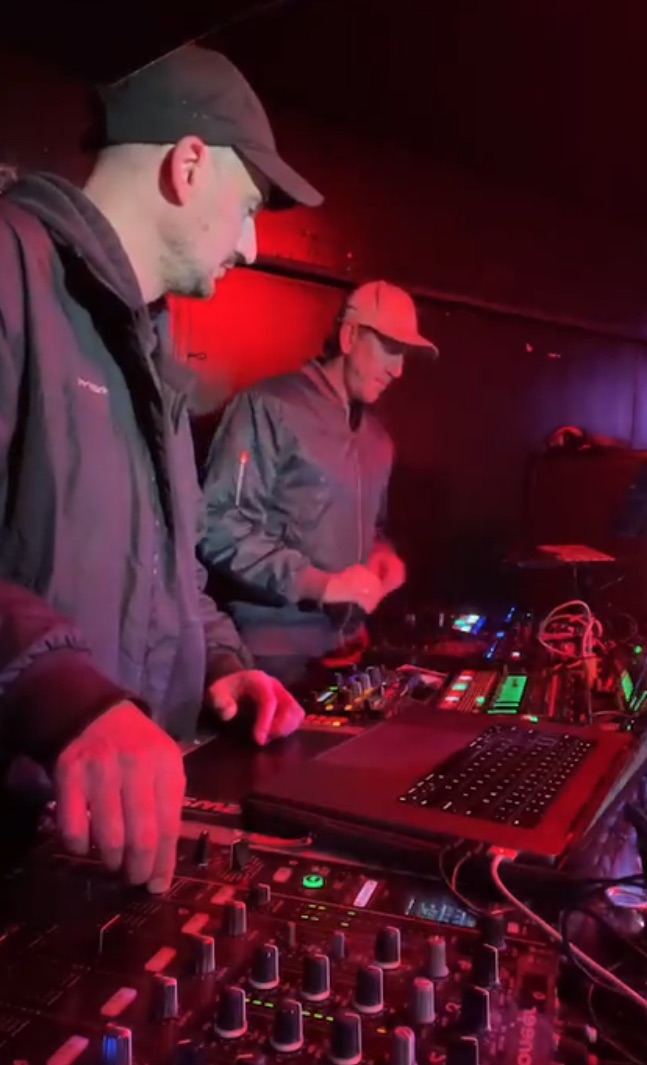
"It's very much a band kind of approach. Sometimes one person's shining with a couple of tricks, then the other will take over — step forward and become the limelight a little bit. It's a lot of give and take."
A band is the right comparison, and not a flattering one they reached for. Bands listen. Bands leave space. Bands know that two people playing at full volume at the same time is noise.
Two operators, one continuous set, one to five hours long. The song being played and the song being made stop being different things.
Eight months for six minutes
The scratching isn't decoration. It has paperwork.
In 2014, Rellik won the DMC Victorian Championships — the state title in the competition that has defined turntablism since before laptops entered the booth.
"I spent a solid eight months on the routine — a six-minute routine — rehearsing about eight hours a day for at least the last four months. That kind of dedication is what you need to make sure the needle doesn't jump, to create the muscle memory, so that when you're on stage you have other things to do."
Eight months of daily repetition, so that six minutes could look loose.
What happened next is the part nobody puts in a bio, and he says it anyway:
"Because I'd held such a high title, it took a while for people to have the confidence to approach me. They thought I'd already achieved that top level. It took a while to convince people to start hiring me again."
A state title that briefly cost him work. Tall poppy syndrome, applied to craft. It says something about the scene that the proof of skill needed explaining. It says more about him that he kept the skill anyway.
The set is the studio
Here's where the duo stops being a live act and becomes a system.
Intalink hears the set the way an engineer hears a mix — not song to song, but as one long arrangement:
"Sometimes I'll have a track in the background for twenty minutes and it's just becoming a texture. It has more of a song-mixing approach than playing song to song."
And the sets feed the records. Around forty of their own tracks released in the past year, most of them tested on a dance floor before they were ever finished.
"A lot of the tracks we make, we test drive in our sets — refine them, get a feel for how they can be played. Some tracks have been made from the live sets, where it's gone back the other way, and we've recreated little moments of where things gelled."
Most producers guess in the studio and hope on the floor. These two reversed it. The room is the A&R department. Songs that don't land get parked, reworked, reconstituted. Nothing is precious. Everything is material.
Thirty years in, the loop is closed: the show makes the music, the music makes the show.
The rooms keep changing hands
Thirty years in one city's booths makes you a historian whether you wanted the job or not.
They held a residency at the Grand Hotel in Richmond for ten years. Ten years is longer than most venues currently keep a name.
"We had a longstanding ten-year residency at the Grand Hotel. Then the owner changed, and what the venue was about changed. Management changes from within, and the dynamic of how they hire people changes. The DJ usually doesn't have much control over that."
They've watched the whole circuit turn over. Fridays fading while Saturdays carry the week. Crowds that drift between venues instead of settling into one. A generation, post-COVID, without the dance-floor stamina the nineties took for granted.
The venues churn. The residencies end when an owner sells. What persists — the only thing that persists — is the two of them and the crates.
The un-synced turntable
There's a reason this profile sits on the Transmission Log next to pieces about AI and creative direction, and it isn't nostalgia.
ILL EAGLE DJS are not purists. They automated everything worth automating — the clock, the stems, the tempo of an entire table of machines. Then they kept one human element deliberately outside the system, matched by ear, because that's where the life comes from.
That's the same argument this label makes about every new tool: automate the floor, never the voice. The machine keeps time. It doesn't decide what happens on top.
Everything in that booth keeps perfect time now.
The reason it works is the one thing that doesn't.
ILL EAGLE DJS — @ill_eagle_djs
DJ Rellik — @dj_rellik_aus
Live sets — youtube.com/@ILLEAGLEDJS · Music — ill-eagledjs.bandcamp.com
Creative Spotlight is an ongoing series on the Henry Skillz Transmission Log — documenting the operators, creatives, and builders working at the intersection of culture, craft, and new systems.
Henry Skillz is the founder of Spacely Clothing and creative director at Holla Back Entertainment. Melbourne-based.
Enlist With The Ground Crew
First access, field notes, and 15% on Spacely, permanently.
Request Access ↗