What You Can't Hear, You Learn to See
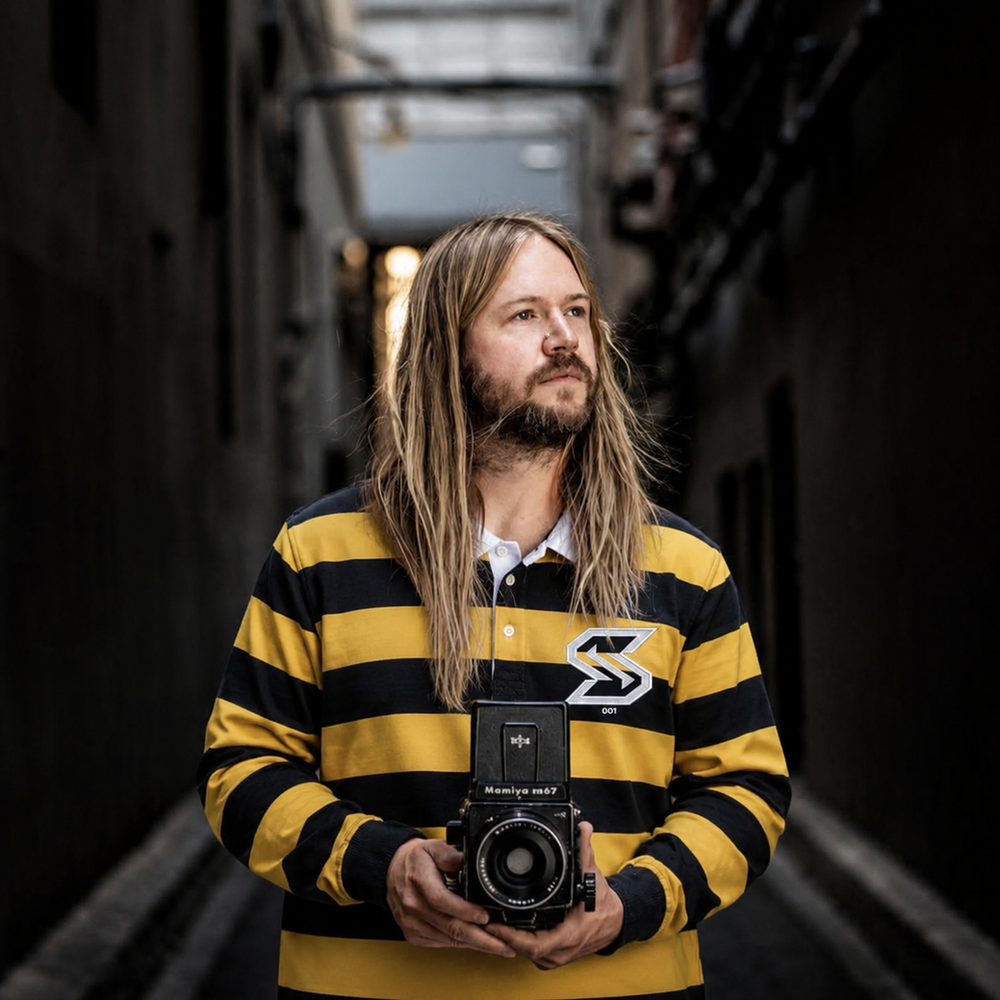
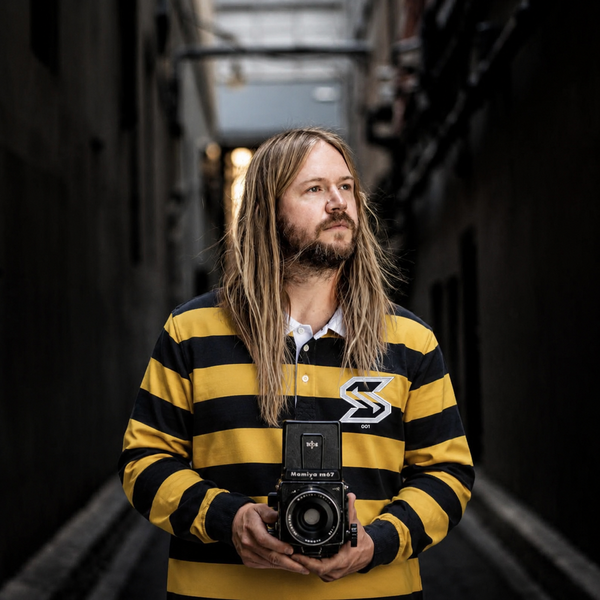
CREATIVE SPOTLIGHT — Scott Ransley — Melbourne, AU · STREET PHOTOGRAPHER. A profoundly deaf photographer who reads the street with his eyes — body language, micro-expressions, the moment before it happens.
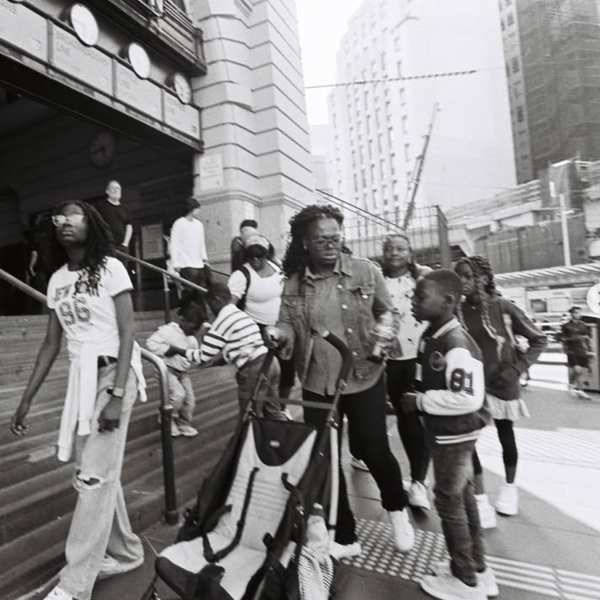
There's a corner outside Flinders Street Station where photographers gather around 5 p.m. The light hits different at that hour—golden, sharp, cutting through the commuter traffic like a knife. There's usually someone there with a camera, watching.
Not watching the way most people watch. Reading. Body language. Hand gestures. The micro-expressions that flash across someone's face when they think no one's looking. Seeing things before they happen.
Most people don't know why he sees this way. They don't know he's profoundly deaf. They don't know his eyes do the work his ears can't. They just think he's good at street photography.
His name is Scott Ransley. And they're missing the real story.
What You Hide
Scott grew up in the Blue Mountains, surrounded by kingfishers and black cockatoos and the kind of isolation that makes you either retreat inward or fight your way out. He fought. But fighting when you're deaf and a kid in primary school—that's a different kind of battle.
There was one moment that stuck with him. A group of girls approached him at school. They knew he wore hearing aids. They told him that meant he should have supernatural hearing capabilities—the ability to zone into any conversation happening nearby.
They made him eavesdrop on strangers. Report back what they were saying.
He played along.
"Because I just wanted people to like me, I just sort of played along with it."
The bullying doesn't always look like fists or slurs. Sometimes it looks like being made useful. Being turned into a spectacle someone else controls. Performing your difference for someone else's entertainment because the alternative—being ignored completely—feels worse.
There were dead legs too. Being singled out. Last to be picked in every sport. Excluded from teams at recess and lunchtime. Physical and emotional. Both kinds of damage, landing on the same kid.
He wore hearing aids. Still does. But somewhere along the way he grew his hair long enough to hide them. Long enough to pass.
"I've got long hair so I can hide it, so people don't know I've got hearing aids."
This is the math of invisible disability: If they can't see it, they can't use it against you. If you can pass, you pass. But passing has a cost. You're always performing. Always managing other people's perception. Always one disclosure away from being treated differently.
He chose invisibility. But invisibility has a way of teaching you to see.
When Survival Becomes Artistry
When you can't hear a car coming, you watch for movement in your peripheral vision. When you can't hear someone call your name, you read their body language. When you can't hear the tone of an argument, you watch the hands, the stance, the distance between bodies.
"I use my eyes because they're heightened up because of my deafness. I think it's always been like that in my life—probably why I can see things peripherally or before other people. I've gotta keep myself safe—from cars, from people, from danger."
This is hypervigilance born of necessity. He developed it from silence.
Before photography, there was music—fifteen years of it, touring the East Coast with indie bands, almost breaking through. But burnout hit, and eventually the music stopped. That's when he picked up a camera. A Nikon F6. He's had it for fifteen years. He shoots only film.
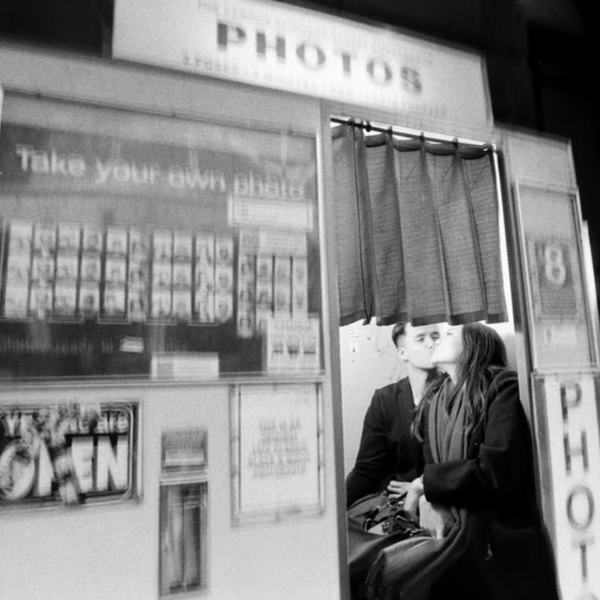
"The main reason I like photography is film. The black and white film, the granular structure, the contrast—mostly the grain. I just love it."
Film isn't forgiving. Every frame costs something. You have to know what you're looking for before you lift the camera.
Lucky for him, he'd been looking his whole life.
What You See That Others Don't
On the street, he has an edge most photographers don't talk about. It's not technique. It's not gear. It's time.
"You probably won't be matching my scope. If you point out something in the street, you might get a good second up on them before they notice it."
One second. That's the window. While other photographers are still registering the moment, he's already seen it. His eyes picked it up first—the same way they've always picked things up, since he was a kid trying to stay safe in a world he couldn't hear.
There's no single photo where he thought, "This is it—this is my gift." It's quieter than that. It's just always been there. The hypervigilance. The peripheral scanning. The ability to read a room before anyone else in it knows something's happening.
And now, with a camera, that same instinct—the one that kept him safe as a kid—is the thing that makes his photography work.
But it comes with a cost he's still paying.
The Jazz Club
There's a small jazz bar in Melbourne that he used to love. He'd go there, have a drink, listen to the music, and do what he always does—watch. Read the crowd. Take in the body language, the interactions, the way people move when they think no one's paying attention.
One night, a bartender tapped him on the shoulder and asked him to leave.
No explanation. No reason given. Just: you need to go.
It had happened because he'd made eye contact with the bartender more than once. In a small room, when you're watching everything, you catch people's eyes. That's inevitable. But the bartender interpreted it as something else entirely.
"This person felt uneasy and didn't want me to be there. I got tapped on the shoulder and got asked to leave for no excuse or reason."
It's happened two or three times since. Different staff, same reaction. He barely goes back now.
"I really don't get to enjoy this jazz club anymore. This perception of someone that thinks my disability falls under being creepy. It's just merely my disability of using my eyes."
He's not angry about it. He's resigned.
"They don't know me. I don't know them. It is what it is."
Maybe in six months he'll go back. Check if the staff have changed. The club will stay the same. The people come and go.
But for now, a place he loved has become a place he can't comfortably exist in. Not because of anything he did. Because someone decided that what he looked like meant he was a threat.
This is the present-day cost of invisible disability. Not a childhood memory. Not something he's moved past. It's happening right now.
The One-Off Photo
When he talks about the photo he's still chasing—the one-off frame that defines him—he doesn't romanticize it.
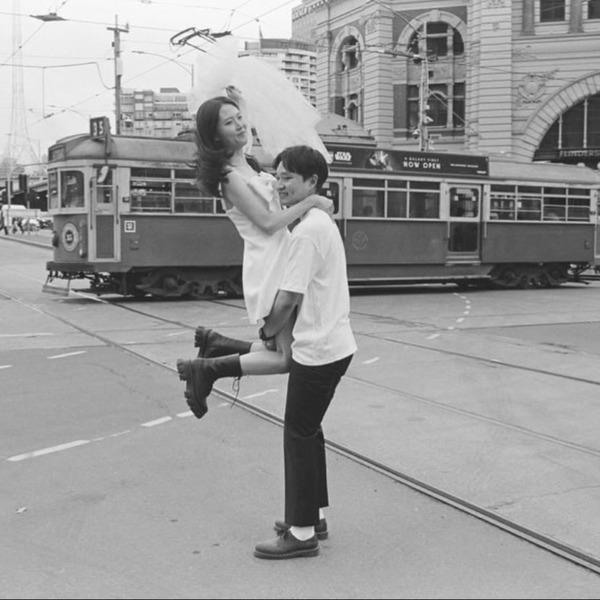
"For me, it has to be captured in a way that the framing is perfect, the contrast is perfect, the grey is perfect, and the subject matter is perfect."
Something tragic. Something political. Something that's never been captured from that angle before.
But here's the thing: he doesn't think it's about skill.
"It usually has nothing to do with the photographer. Sometimes all the skill sets and everything, you just gotta be lucky. Right place, right time."
He's not chasing greatness through talent alone. He's chasing convergence. The moment when preparation meets luck meets the right frame. His job isn't to manufacture that moment. It's to make sure that when it arrives, he's ready.
"Have the camera ready. Have the film stop ready. Have the framing ready. And then shoot what you see right in front of you."
That's why he walks every day. That's why he shows up at Flinders Street Station at 5 p.m. when the light hits right.
He's not waiting for inspiration. He's building the conditions for luck to land.
The Legacy
When he talks about what he wants to leave behind, he doesn't talk about fame. He doesn't talk about proving something to the kids who bullied him. He talks about other people.
"It's not to prove it to anybody. It's just a little thing."
The bare minimum, as he sees it: one or two photos in a government archive. A library. Free access. For anyone who wants to see what life looked like during this time.
"A government-paid library, and you got one of your photos in their collection. I think that's a great honour."
But underneath that, there's something bigger.
"What are you gonna leave behind when you're gone? What are you gonna be remembered for?"
Music burned him out after fifteen years. Photography is where he put everything now. But the thing driving him isn't recognition. It's generosity.
"It's always doing stuff for other people to have access to and to see for free almost. I think that's what it is—to leave behind something that has my name attached to it."
Not for ego. For access. For the next generation. For the person in 2045 who wants to know what Melbourne looked like, what the streets felt like, what an ordinary Tuesday afternoon at Flinders Street Station sounded like.
His photos will answer those questions. Not because he's famous. Because he showed up. Every single day. With a camera. And trusted that the work would outlast the moment.
What you can't hear, you learn to see.
What you see, you learn to preserve.
Not for today. For the archive.
For the people who'll look back and ask: What was it like?
Scott Ransley's photos will answer.
Follow Scott's work: Instagram: @battlecatx
Listen to the full conversation: Blasé Sound, Episode 48 – Scott Ransley (@battlecatx)
This is part of an ongoing series documenting Melbourne's creative community—the artists, DJs, photographers, and makers who show up every day, build their craft quietly, and trust that the work will compound.
Enlist With The Ground Crew
First access, field notes, and 15% on Spacely, permanently.
Request Access ↗